Parasites In Humans
Find The Nastiest Parasites In Humans
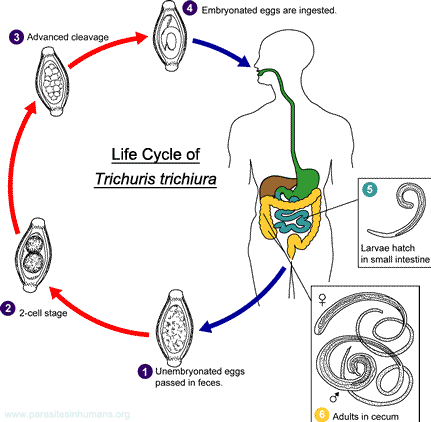
Trichuris Trichiura - WhipwormWhipworm is a parasitic worm infecting 500 million humans in tropical countries. It lives its adult life in the large intestine. The human whipworm is called Trichuris trichiura and causes trichuriasis. Whipworm gets its name from its appearance. The anterior is thin and long whereas the posterior end is thicker. The thin front part is burrowed in your intestinal wall eating nutrients from the mucosa. Adult female is 35–50 mm, whereas male is about 30–45 mm long. Both sexes are white-pink in colour. Whipworm's life cycle starts, when the female lays eggs in the large intestine of an infected human. The eggs are carried out in the feces. If landed on warm moist soil, after 2–3 weeks the eggs have embryonated and are infective ready to be ingested. The eggs get inside you, if you eat contaminated unwashed and uncooked vegetables, rice or beans. Larvae hatch in the small intestine and invade the intestinal villi and start growing. After a while they move to the large intestine where they penetrate the mucosa and develop into adults. Only the head part, the anterior of the worm is threaded into the intestinal wall. The posterior end is hanging loose, ready to mate, if another whipworm of the opposite sex passes by. The life cycle completes, when females and males mate and eggs are produced at the rate of 2000–10000 eggs per day. The cycle from egg to mature adult takes a few months. Adult females live about five years. Small amounts of whipworms might not cause any symptoms. But if there are hundreds of worms, then you might have bloody diarrhea and anemia due to severe vitamin and iron loss. The worms leave open wounds which cause inflammation of the intestinal wall. In some cases you might also develop rectal prolapse which means that your rectum comes out, if you push hard. Trichuriasis is diagnosed by examining stool to find eggs which are brown, smooth, unembryonated and barrel-shaped. Mebendazole and albendazole are good drugs for killing the whipworm. Iron deficiency, anemia and rectal prolapse can be treated with supplements. To prevent reinfection you should take good care of your personal hygiene and food handling. Wash and cook your food. You can also freeze it for a few days to kill any parasites. Whipworm is one of the worms being used in helminthic therapy which helps against allergies and autoimmune diseases.
Also check out the whipworm videos.
|
Parasites In Humans Pictures And Videos Contact Info Privacy Policy Sitemap
© 2010–2015 parasitesinhumans.org